


Introduction
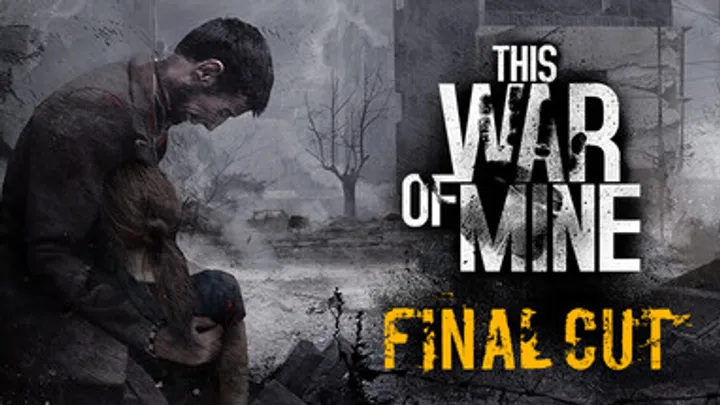
This War of Mine, developed by 11 bit studios, is often described as a survival game set during a siege. But that description undersells its true focus. Unlike most war games that center soldiers, heroism, or tactical dominance, This War of Mine forces players into the role of civilians trapped inside a collapsing city. You manage hunger, illness, depression, and the constant threat of violence—not as an armed force, but as ordinary people trying to outlast catastrophe.
The specific issue that defines This War of Mine is not combat difficulty or narrative branching. It is the economic structure of suffering—how scarcity transforms ethical decisions into survival calculations. The game is not about whether you are good or bad. It is about how limited resources, psychological pressure, and unpredictable violence erode moral certainty over time.
This article explores how the game systematically constructs an economy of desperation and how that system reshapes player morality from day one to the bitter end.
Day One: Shelter Without Security
Establishing the Ruin
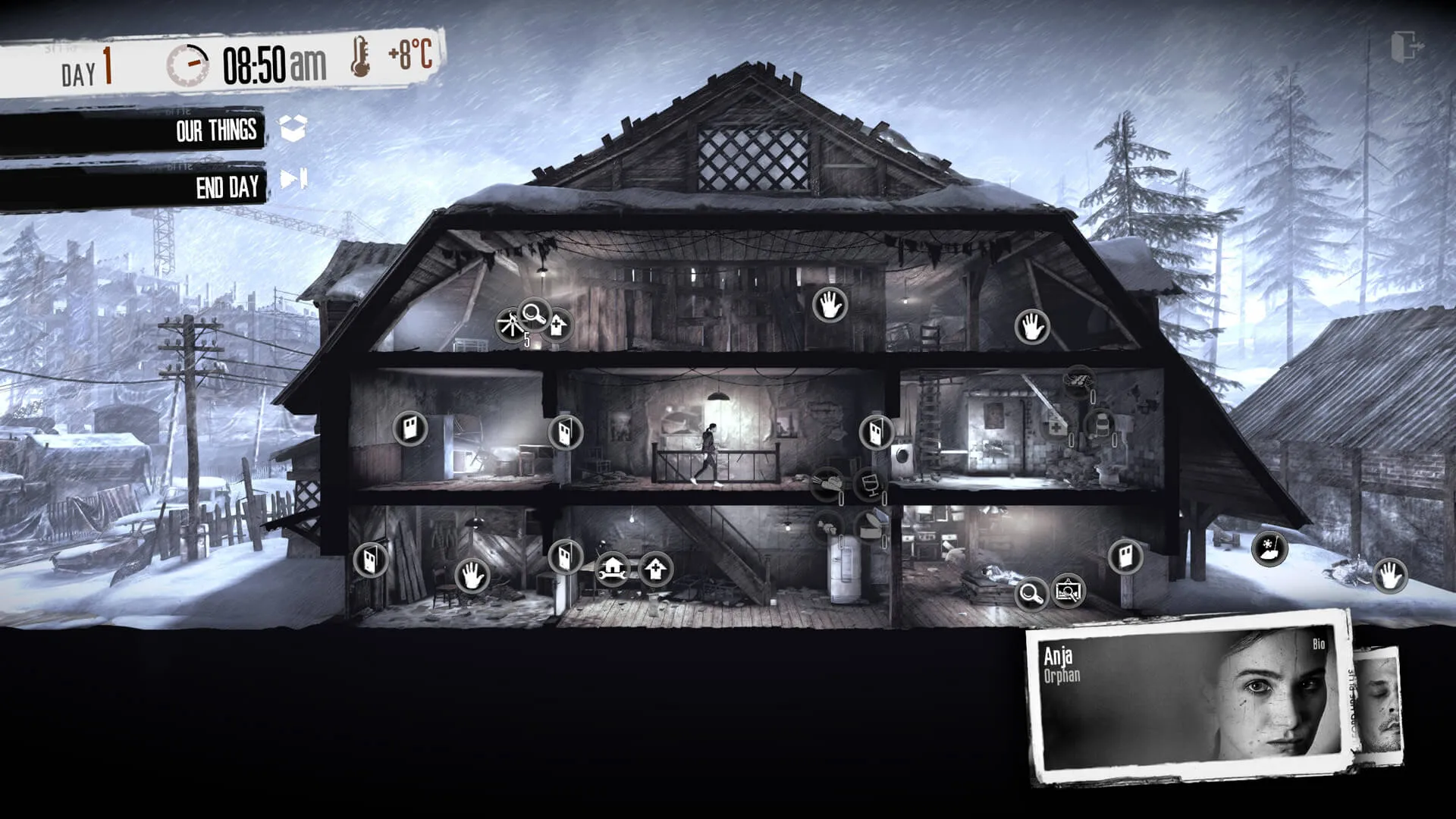
The game opens inside a shattered house. Walls are broken. Furniture is splintered. Snow or ash drifts through gaps in the ceiling. You control a small group of survivors—each with unique traits, backstories, and vulnerabilities.
Immediately, the interface presents needs:
- Hunger
- Fatigue
- Sadness
- Illness
- Materials
- Fuel
There is no tutorial about heroism. Only survival metrics.
Scarcity as Foundation
Resources are limited from the beginning. You have:
- A few pieces of wood
- Minimal food
- No reliable medicine
- No protection
The message is clear: survival is not guaranteed.
The war is not background noise. It is the condition of existence.
The First Nights: Scavenging as Moral Risk
The Night System
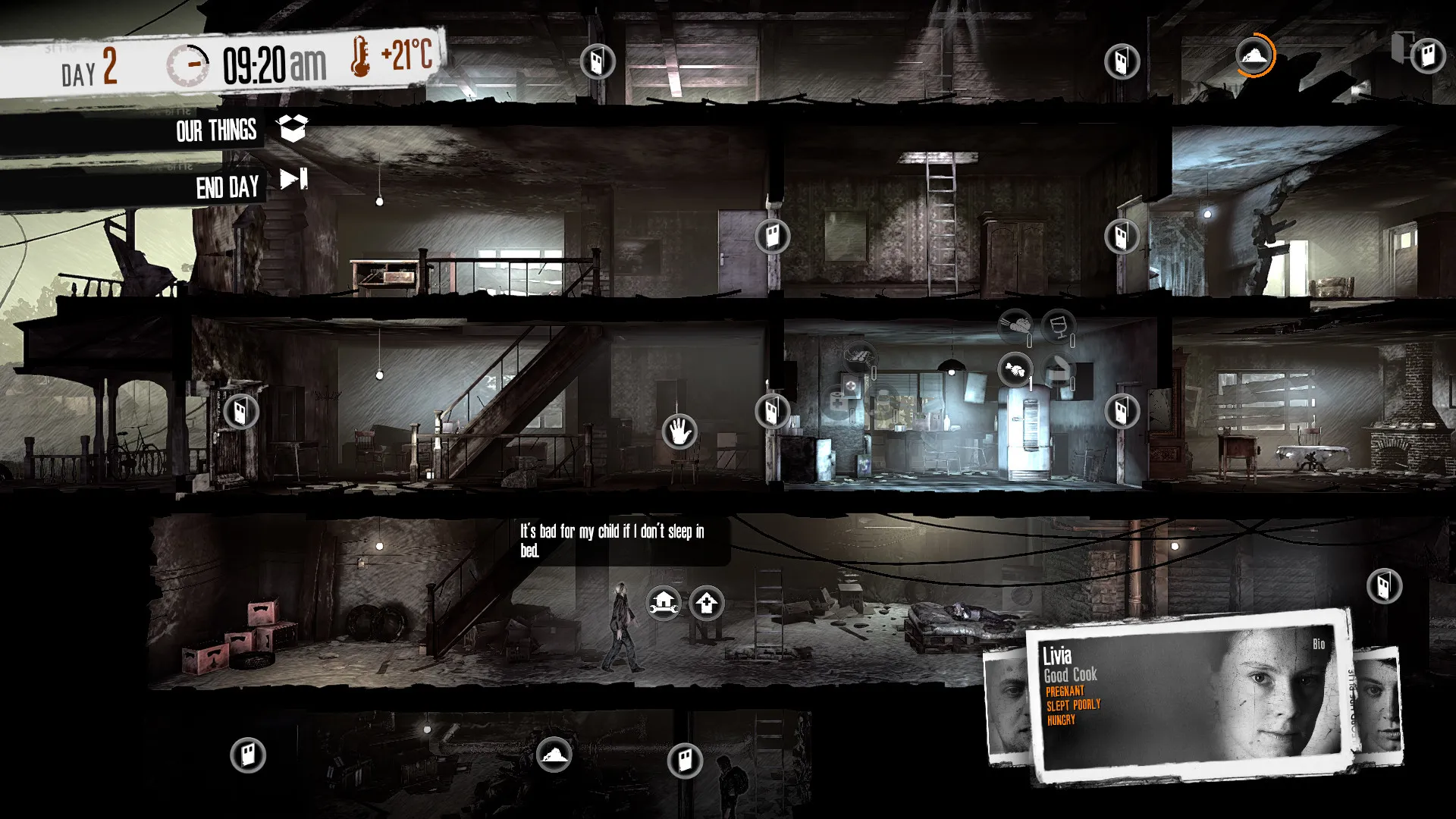
By day, you craft and rest. By night, one character must scavenge.
Night locations include:
- Abandoned houses
- Shelters with elderly residents
- Military-controlled warehouses
- Hospitals
- Rebel checkpoints
Each location presents opportunity—and moral hazard.
Stealing from the Helpless
Early on, you may encounter:
- An elderly couple guarding medicine
- A sick father protecting food for his daughter
You can steal. You can kill. Or you can leave empty-handed.
The consequences are not abstract.
If you steal, your survivors may:
- Become depressed
- Refuse to eat
- Argue
- Spiral emotionally
But if you do not steal, you may starve.
Scarcity reframes theft as strategy.
Hunger as Psychological Pressure
Gradual Degradation
Hunger in This War of Mine is not immediate death. It is cumulative.
First: Hungry
Then: Very Hungry
Then: Starving
The escalation is slow, but relentless.
Food as Currency
Food becomes:
- A survival necessity
- A trade commodity
- A bargaining tool
One can:
- Trade medicine for canned goods
- Sell cigarettes for raw meat
- Exchange parts for vegetables
Everything becomes negotiable.
The moral value of objects shifts. Medicine may be more valuable than food—until hunger worsens.
Illness and the Cost of Compassion
Sickness as Spiral
Cold weather increases illness risk. Lack of beds worsens recovery. Insufficient fuel causes freezing.
Once sick, survivors:
- Move slower
- Scavenge less effectively
- Require medicine and rest
Triage Decisions
If you have one medicine and two sick survivors, you must choose.
There is no neutral option.
The system forces triage.
War does not create villains here. It creates impossible distributions.
Violence Without Glory
Combat as Last Resort
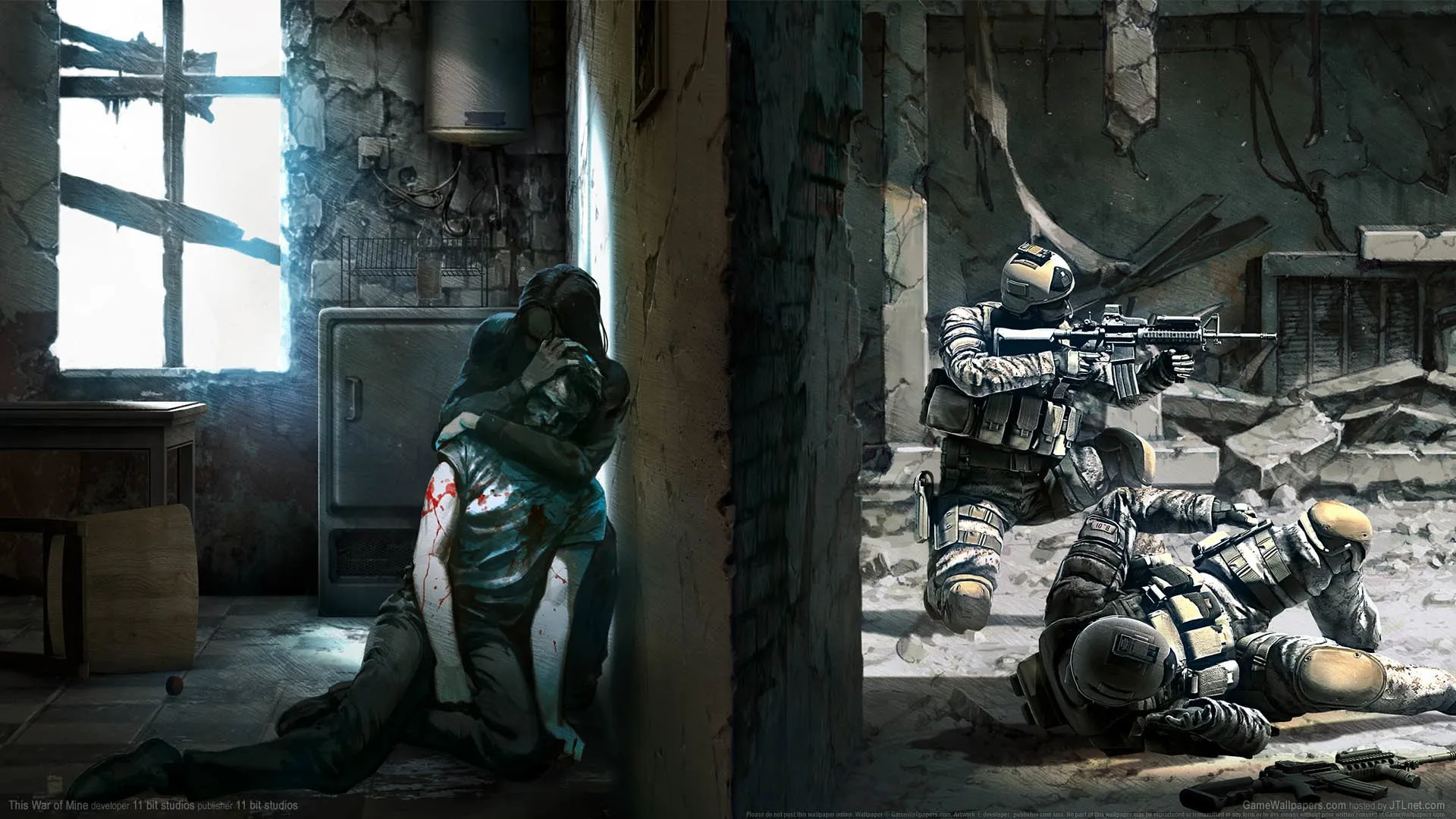
Combat mechanics are clumsy by design. There is no empowerment.
Weapons:
- Knives
- Crowbars
- Rare firearms
Fighting is dangerous and unpredictable.
The Aftermath of Killing
If a character kills someone, even in self-defense:
- They may become broken
- They may refuse to act
- They may fall into depression
Killing is not rewarded with loot satisfaction. It carries emotional cost.
Violence is survival—but it is never triumphant.
Depression and Mental Collapse
Emotional States as Gameplay
Survivors can become:
- Sad
- Depressed
- Broken
Mental health is not cosmetic. It affects productivity and survival.
The Snowball Effect
If one character collapses emotionally:
- Others become distressed
- Efficiency drops
- Resources shrink faster
Psychology becomes as vital as food.
The war is internal as much as external.
Trading and the Black Market Economy
The Trader Visits
Occasionally, a trader appears at your shelter.
He brings:
- Food
- Medicine
- Weapons
- Materials
But he demands value in return.
Relative Worth
Certain characters have trading advantages. Some items gain value during winter. Cigarettes are essential for smokers.
The economy is fluid.
War shifts what matters.
A book may be worthless today and priceless tomorrow if morale collapses.
Winter: Environmental Cruelty
Temperature as Threat
When winter arrives:
- Fuel becomes critical
- Heaters must be built
- Wood disappears rapidly
Cold worsens illness and depression.
Resource Prioritization
You must decide:
- Burn wood for heat?
- Save it for crafting?
- Trade it for food?
Winter magnifies scarcity.
The environment becomes a silent antagonist.
Random Events and Loss of Control
External Intrusions
Raiders may attack your shelter at night. Supplies vanish. Survivors are wounded.
You cannot prevent everything.
Narrative Events
Strangers may ask for:
- Medicine for a wounded child
- Help defending against looters
- Shelter from violence
Helping them costs resources.
Refusing them costs morale.
Randomness reinforces instability.
Endgame Fatigue and Moral Exhaustion
Prolonged Survival
As days stretch on, resources dwindle. Survivors accumulate trauma.
The goal is unclear: wait for ceasefire.
But waiting is agony.
Emotional Burnout
Players often report a shift:
- Early game: cautious compassion
- Mid game: calculated morality
- Late game: ruthless efficiency
The system trains adaptation.
Kindness becomes luxury.
The Ceasefire and Aftermath
War’s End
When the war ends, survival is measured:
- Who lived
- Who died
- Who broke
There is no triumphant parade.
No Restoration
Even successful endings carry scars.
Survivors may be permanently altered.
The game does not celebrate endurance.
It simply stops the suffering.
Why the System Works
Mechanics and Theme Alignment
Every mechanic reinforces:
- Fragility
- Scarcity
- Emotional cost
- Moral ambiguity
There is no separation between narrative and gameplay.
Civilian Perspective
Unlike traditional war games:
- There are no missions
- No strategic victories
- No enemies to defeat permanently
War is not a battlefield.
It is a slow erosion of humanity.
Conclusion
This War of Mine is not about surviving war as a test of skill. It is about surviving scarcity as a test of morality. By structuring the entire experience around limited resources, psychological fragility, and unpredictable danger, the game constructs an economy in which every decision carries ethical weight.
You steal because you must.
You refuse help because you cannot afford kindness.
You ration medicine because there is not enough to go around.
The brilliance of This War of Mine lies in how it refuses spectacle. There are no heroic charges, no cinematic triumphs, no power fantasies. Instead, there is cold, hunger, exhaustion, and regret.
War in this game is not explosive. It is administrative. It is economic. It is domestic.
And perhaps its most unsettling message is this:
Under enough pressure, survival reshapes morality—not because people become evil, but because systems make compassion unsustainable.
160-character summary
This War of Mine explores how scarcity reshapes morality, forcing civilians into impossible choices where survival steadily erodes compassion.