 ratethatgameh5.com
Clanfolk Tips & Guide: Essential Strategies for Survival, Farming, Family Management, and Building a Thriving Highland Settlement

Clanfolk is a historical colony simulation game set in the rugged Scottish Highlands. Instead of managing a modern city or a fantasy kingdom, you guide a family through the challenges of surviving in a harsh environment. Your settlers must build shelter, gather food, manage livestock, prepare for winter, and gradually establish a self-sufficient homestead.
The game combines resource management, construction, farming, crafting, and family development. Every season brings different challenges, and the decisions you make early can determine whether your settlement thrives or struggles when conditions become more difficult. A building that provides adequate shelter in summer may be insufficient during winter, while a plentiful harvest can become a lifeline when outdoor work is no longer practical.
For beginners, Clanfolk can feel demanding because so many systems depend on one another. Food production requires land, tools, and labor. Construction consumes resources that might otherwise be used for essential goods. Family members also need rest, warmth, and suitable living conditions to remain productive.
The key to success is building a stable homestead before pursuing rapid expansion. By planning around the seasons, assigning work carefully, managing food reserves, and improving your settlement gradually, you can create a resilient Highland community that survives and prospers over generations.
1. Understand the Core Survival Systems
Clanfolk is built around the relationship between people, resources, buildings, and the environment. Your family must meet its immediate needs while investing in the infrastructure that makes future survival easier.
At the beginning, the most important objective is not to build an impressive settlement. It is to ensure that your clan has somewhere safe to sleep, access to food, and the resources needed to handle changing weather.
Prioritize Survival Before Expansion
Early resources are limited, so every construction project should have a clear purpose. A large workshop or elaborate storage area may be useful later, but it should not take priority over essential shelter and food supplies.
Start by establishing the basics:
- Provide suitable shelter for your family.
- Secure reliable sources of food and water.
- Gather materials needed for construction and crafting.
- Create appropriate storage for important resources.
- Organize work so essential tasks are completed consistently.
Once these foundations are in place, you can begin developing more specialized production and improving living conditions.
Learn How Needs Affect Productivity
Your settlers are not simply workers who perform tasks indefinitely. They need rest, food, warmth, and suitable living conditions. Ignoring these needs can make the entire settlement less productive.
Pay attention to problems affecting individual family members. If someone is struggling because of inadequate shelter, poor rest, or a shortage of food, addressing that issue may be more valuable than assigning another work task.
A healthy, well-supported family is the foundation of a successful homestead.
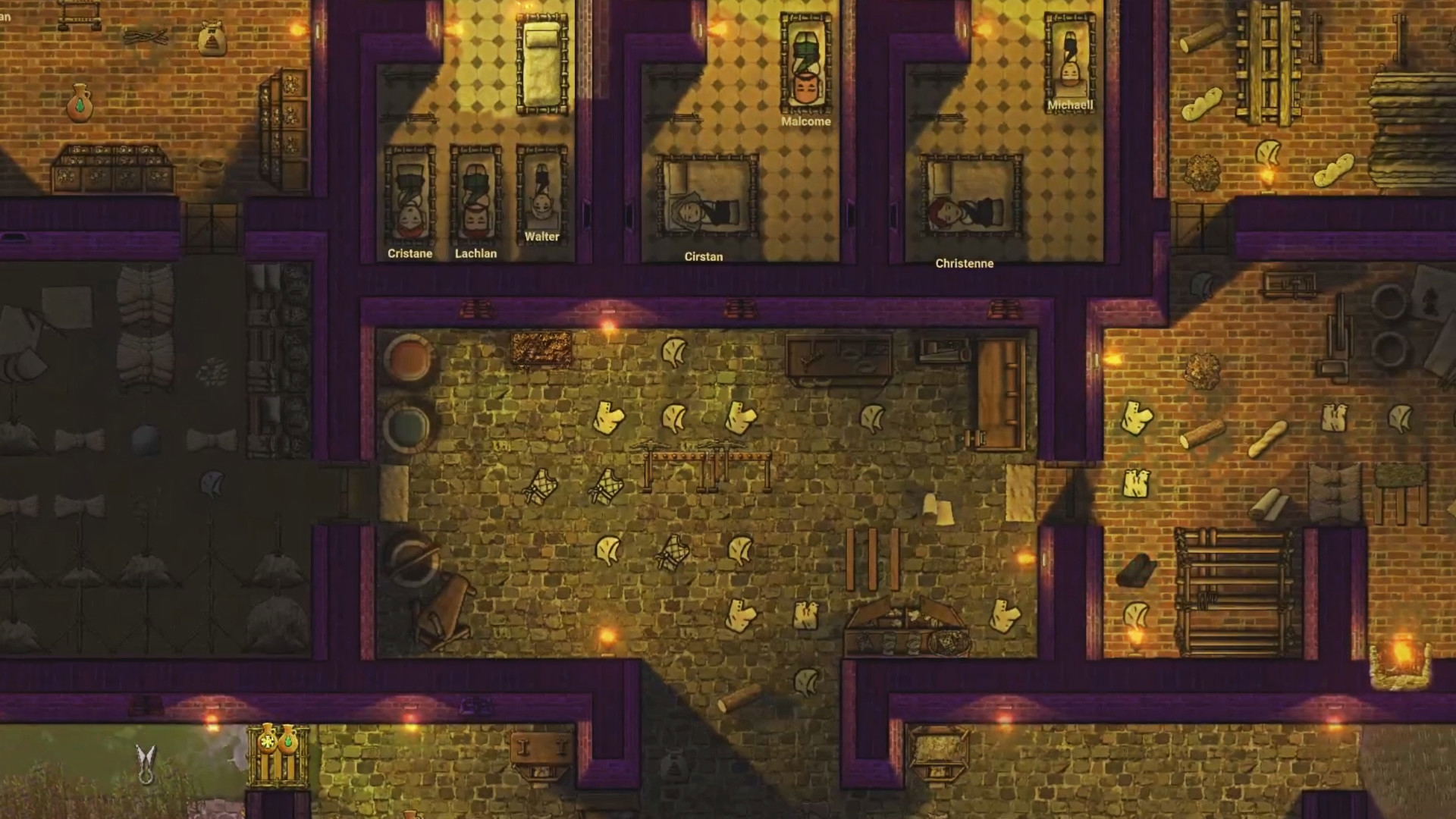
2. Choose a Practical Settlement Layout
The location and layout of your settlement influence how efficiently your family can work. Buildings, resource areas, storage, and production stations should be arranged so that settlers can complete everyday tasks without excessive travel.
You do not need a perfectly optimized layout at the beginning. A practical design that can expand over time is much more useful than a complicated plan that consumes all your initial resources.
Build Around Essential Activities
Consider which tasks your family performs most frequently. Sleeping, preparing food, storing materials, crafting, and tending animals should be convenient to access.
Place related structures near one another when doing so reduces unnecessary movement. For example, keeping commonly used storage near production areas can make it easier to move materials between stages of a crafting process.
At the same time, leave room for future construction. A settlement that uses every available space immediately can become awkward to expand.
Keep Travel Distances Reasonable
A settler may lose valuable working time moving between distant storage, production stations, and resource areas. These small delays can accumulate when many tasks must be completed in a single day.
When planning your layout, consider the complete journey involved in a task rather than looking only at the position of an individual building.
Useful habits include:
- Keep frequently used storage close to relevant workstations.
- Group related production buildings together.
- Leave clear routes between important areas.
- Avoid unnecessary separation between essential facilities.
- Reserve space for future farms, workshops, and animal areas.
Expand in Stages
As your family grows and your production needs change, you can develop the settlement further. Add new structures when you have enough resources to maintain them without compromising essential needs.
A small, organized homestead is often easier to manage than a large settlement filled with unfinished projects.
3. Manage Food Supplies and Prevent Hunger
Food management is one of the most important parts of Clanfolk. Your family needs a dependable food supply throughout the year, including periods when growing, gathering, or hunting opportunities may be limited.
A settlement that survives comfortably during favorable weather can still encounter serious problems if its food reserves are inadequate when the seasons change.
Use Multiple Food Sources
Relying on a single food source can make your settlement vulnerable. If a harvest is poor or a particular resource becomes difficult to obtain, your family may struggle to maintain an adequate supply.
Whenever possible, develop several complementary methods of obtaining food. Depending on your progress and available resources, these may include gathering, hunting, fishing, farming, and animal husbandry.
Diversification creates flexibility. If one source becomes less productive, another may help support your family.
Monitor Consumption and Reserves
The amount of food you need depends on the size of your household and the length of time you must survive without reliable replenishment.
Review your current supplies regularly rather than waiting until the storage area is nearly empty. Consider how much food your family consumes and whether the next season will make obtaining more difficult.
When supplies are low, prioritize food production over optional construction and other nonessential activities.
Preserve Food for the Future
Obtaining food is only part of the challenge. You also need to manage it so that resources remain useful when they are needed.
Learn the preservation and storage options available as you progress. Prepare suitable food supplies ahead of periods when fresh resources may be less accessible.
Do not assume that a large harvest automatically guarantees long-term security. Consider storage conditions, preservation methods, and the rate at which your family consumes its supplies.
Avoid Overproducing Perishable Goods
Collecting or preparing more food than you can use or preserve efficiently may waste valuable labor.
Balance immediate consumption, future reserves, and available storage. The goal is to maintain a dependable supply, not to accumulate the largest possible quantity of food at every opportunity.
4. Prepare for Seasonal Changes and Winter
Seasonal planning is central to Clanfolk. Weather influences which activities are practical, what resources are available, and how much preparation your settlement needs.
Winter deserves particular attention because cold conditions can make outdoor work difficult and increase the importance of shelter, warmth, clothing, and stored supplies.
Prepare Before the Weather Changes
Do not wait until the first serious cold period to begin preparing. Use favorable seasons to gather materials, improve buildings, secure food, and organize essential production.
A settlement that enters winter with unfinished construction and inadequate supplies will have fewer options when conditions become difficult.
Before winter, review whether you have:
- Enough food for the expected period.
- Suitable shelter for everyone.
- Fuel or other resources required for warmth.
- Appropriate clothing and bedding as available.
- Materials for essential repairs.
- Indoor work that can continue during poor weather.
These preparations reduce the pressure on your family when outdoor opportunities become limited.
Make Buildings Suitable for the Climate
A structure that exists is not necessarily a structure that provides adequate protection. Pay attention to the game's building and insulation mechanics, and improve living spaces when cold conditions expose weaknesses.
Prioritize rooms and facilities that contribute most directly to survival. Improving essential sleeping and living areas can be more valuable than constructing additional buildings that your family does not yet need.
Adjust Work to the Season
The most productive schedule changes throughout the year. Favorable weather may offer opportunities for outdoor resource gathering and farming, while winter may be better suited to indoor crafting, repairs, and other tasks that can continue safely.
Plan ahead so that your family has useful work available even when some activities become impractical.
Seasonal planning turns winter from an emergency into a predictable challenge.

5. Assign Work and Manage Family Labor
Clanfolk requires careful labor management because the same people must perform productive tasks while meeting their own needs. A work schedule that looks efficient on paper may fail if it leaves insufficient time for rest or essential daily activities.
The goal is to ensure that important tasks are completed consistently without overwhelming your settlers.
Prioritize High-Value Tasks
Not every job deserves equal attention. Food production, shelter, and essential survival activities should generally take precedence over optional construction or low-priority crafting.
Review the tasks currently available and identify which ones are most urgent. If food reserves are running low, for example, it may be necessary to delay a workshop project until supplies are secure.
A clear hierarchy helps prevent workers from spending valuable time on tasks that do not address the settlement's most pressing needs.
Match Tasks to Individual Strengths
As you learn more about your family members and their abilities, consider how to distribute work effectively. Some settlers may be better suited to particular activities, while others can cover general labor and urgent needs.
Use specialization where it offers a clear benefit, but avoid creating a schedule so rigid that no one can respond to unexpected problems.
A flexible workforce is particularly valuable when weather, resource shortages, or changing household needs disrupt your original plans.
Watch for Work Bottlenecks
If a project repeatedly falls behind, the problem may not be a lack of resources. It could be that too few people are assigned to the relevant task, materials are stored too far away, or essential work keeps taking priority.
Investigate why the task is delayed before expanding the project.
Sometimes a small adjustment to priorities or building placement can improve productivity more effectively than adding another worker.
Protect Time for Rest
A family member who is constantly occupied may struggle to maintain productivity. Make sure the overall work schedule leaves room for essential personal needs.
Rather than maximizing the number of assigned tasks, aim for a routine that the household can sustain across many days and seasons.
6. Gather Materials and Build a Sustainable Economy
Construction and crafting depend on a steady supply of materials. Wood, stone, fibers, food ingredients, and other resources each support different parts of the settlement, so managing them carefully is essential.
During the early game, you may need to gather many materials manually. As your settlement develops, you can establish more efficient ways to obtain, process, and store the resources you use most often.
Identify Your Most Important Materials
Start by learning which materials are needed for essential structures and production. Keep these requirements in mind when gathering, and avoid using scarce resources for optional projects if they are required for survival or progression.
When planning a building, check its material costs before starting. This prevents you from beginning several projects that compete for the same limited stockpile.
Build a Resource Buffer
Maintaining a reserve of commonly used materials helps you respond to emergencies and take advantage of new opportunities.
For example, keeping construction materials available can make it easier to repair or expand essential facilities without delaying other work. A reserve of crafting ingredients can also reduce the need for repeated gathering trips.
The size of the reserve should match your current needs. A small household requires fewer resources than a larger settlement with more buildings and production responsibilities.
Avoid Unnecessary Construction
Every new structure consumes resources and may require additional maintenance or labor. Building more than you can use can leave your settlement short of materials for important tasks.
Before starting a project, ask whether it improves survival, productivity, storage, or future development. If the answer is unclear, consider postponing it.
A sustainable economy is built by using resources where they provide the greatest benefit.
Organize Storage for Easier Work
Storage affects how easily settlers can access materials. Keep frequently used supplies accessible to the buildings and activities that depend on them.
When crafting or construction slows down, check whether the required materials are actually available to the workers performing the task.
Good storage organization reduces unnecessary movement and makes the entire settlement easier to manage.
7. Develop Farming, Livestock, and Long-Term Food Production
Farming and animal husbandry can provide more dependable sources of food and materials as your settlement develops. These systems require planning, space, and labor, but they can reduce your dependence on unpredictable gathering opportunities.
The key is to establish production that your family can realistically maintain.
Start With Manageable Agricultural Projects
Farming requires attention to the seasonal cycle and the resources available to your settlement. Begin with a manageable area rather than dedicating all your labor to a large agricultural project immediately.
Consider what your household needs most and which crops are appropriate for the conditions. Expand when your family has enough time and resources to manage additional land.
A smaller farm that is maintained properly is more useful than a large one that competes with essential survival work.
Treat Livestock as a Long-Term Investment
Animals can provide valuable products, but keeping them also creates responsibilities. You need to consider their food, housing, care, and the labor required to maintain them.
Before expanding your herd, determine whether your settlement can support the additional demands. If animal care begins to interfere with other essential activities, reduce expansion until your production systems become more reliable.
Coordinate Agriculture With Winter Preparation
Farming and livestock management should support your seasonal plans. Use productive periods to build reserves and prepare the infrastructure needed to maintain the household when conditions change.
Do not evaluate agricultural success only by the amount produced during a single harvest. Consider how much food and material remains available after accounting for consumption, preservation, and future needs.
Expand Production Gradually
Once your initial food systems are stable, increase capacity in response to actual demand. More crops or animals are not automatically better if the additional production cannot be managed efficiently.
A balanced approach keeps your food supply dependable while preserving enough labor for construction, crafting, and other essential activities.

8. Improve Crafting, Tools, and Production Efficiency
Crafting allows your settlement to transform raw materials into useful goods. Tools and manufactured items can support construction, farming, clothing production, and other activities that improve the quality of life in your homestead.
However, crafting consumes both materials and time. Choosing the right items to produce is more important than simply keeping every workstation busy.
Craft Items That Solve Real Problems
Prioritize items that unlock useful capabilities, improve production, or address current shortages. A tool that helps your family perform an essential task may offer greater long-term value than a decorative item or an upgrade that you rarely use.
Before crafting, review the required materials and consider whether they are needed elsewhere.
This helps you avoid consuming scarce resources on products that do not contribute meaningfully to your current plans.
Build a Reliable Production Sequence
Some goods require several steps, with raw materials processed into intermediate components before the finished item can be produced.
Plan these steps in advance and ensure that each stage has access to the materials it needs. If production repeatedly stalls, identify the missing input or labor requirement rather than assuming that the workstation itself is the problem.
Organizing production around clear priorities makes crafting easier to manage.
Use Indoor Work During Difficult Weather
When outdoor tasks become less practical, indoor production can help keep your family productive. Prepare the materials needed for useful crafting projects before bad weather arrives.
This works best when you avoid leaving every crafting requirement until the last moment. A small reserve of suitable materials gives your family more options when outdoor gathering is restricted.
Invest in Efficiency Before Complexity
More workshops and more complicated production chains can increase your capabilities, but they also require resources and management.
Improve your existing systems before adding unnecessary complexity. Reliable production is more valuable than a large collection of workstations that cannot operate consistently.
9. Manage Family Growth and Household Stability
Clanfolk is about building a family and developing a settlement over time, not merely surviving from one day to the next. As your household changes, its needs and labor capacity change as well.
Family growth can create new opportunities, but it also increases demand for food, shelter, clothing, and other resources.
Plan for a Larger Household
Before expanding your family, consider whether your current settlement can support additional members. More people may provide greater labor capacity over time, but they also require adequate living conditions and resources.
Review available food, sleeping arrangements, and household infrastructure before making major long-term commitments.
A stable household is better positioned to handle growth than one already struggling with shortages.
Maintain Suitable Living Conditions
The quality of the home affects everyday life. Provide appropriate sleeping arrangements, warmth, and other necessities as your resources allow.
When your household experiences recurring problems, identify their underlying cause. Improving essential living conditions may solve several difficulties at once and make daily routines more manageable.
Balance Family Needs With Work
A larger household may offer more potential labor, but every family member has personal needs and limitations. Do not assume that adding more people automatically solves a shortage of productivity.
Instead, evaluate the balance between available workers, essential tasks, and the time needed for rest and daily activities.
Adjust work assignments as the household changes so that survival and production remain sustainable.
Think in Generations
Long-term progress depends on preserving a stable foundation. Buildings, skills, productive land, useful resources, and established systems can all contribute to the settlement's future.
Avoid making decisions based solely on immediate convenience if they leave the household poorly prepared for the next season or stage of development.
10. Avoid Common Mistakes and Build a Resilient Homestead
A successful Clanfolk settlement is not created by completing every possible project as quickly as possible. It grows through careful preparation, sensible priorities, and consistent attention to the family's changing needs.
Many common setbacks occur when players expand too quickly, ignore seasonal preparation, or allow optional tasks to compete with survival.
Do Not Wait Until Winter to Prepare
One of the most damaging mistakes is postponing food storage, shelter improvements, or other essential preparations until cold weather has already arrived.
Use favorable seasons to build reserves and complete work that will be more difficult later. Review your settlement before conditions change so that you have time to address weaknesses.
Avoid Expanding Beyond Your Labor Capacity
Every farm, workshop, animal area, and building project requires attention. Expanding all of them simultaneously can spread your family too thin.
Finish essential projects before adding more responsibilities. If the household struggles to keep up, temporarily reduce optional work and focus on restoring stability.
Do Not Ignore Small Shortages
A minor shortage of a frequently used material can eventually stop construction, crafting, or food production. Check supplies regularly and identify recurring shortages before they become serious.
If a material is always running low, improve the way you obtain or use it rather than repeatedly reacting to the same problem.
Avoid Excessive Micromanagement
It is important to monitor your settlers, but constantly changing every assignment can make the settlement difficult to manage. Establish sensible work priorities and review them when conditions change.
Use a stable routine for ordinary days, then adjust it when weather, shortages, or major projects demand attention.
Measure Progress by Stability
A thriving homestead is not necessarily the largest one. It is a settlement that can feed its family, maintain suitable shelter, produce essential goods, and survive seasonal changes without constant emergencies.
Before pursuing another major expansion, check whether your existing systems can support it. If the settlement is stable, expansion becomes a calculated investment rather than a risky gamble.
Conclusion
Clanfolk challenges players to build a sustainable Highland homestead through careful planning, seasonal preparation, and effective family management. The strongest start comes from securing shelter, establishing dependable food supplies, organizing your settlement, and assigning work according to immediate needs.
As the family grows, develop farming, livestock, crafting, and resource production at a manageable pace. Prepare for winter well in advance, maintain reserves of essential materials, and make sure every new building or project serves a clear purpose.
Above all, treat survival as a long-term process. A well-organized settlement with reliable food, adequate shelter, and a balanced workload will be better equipped to handle difficult seasons and future generations. With patience and thoughtful resource management, you can turn a modest Highland homestead into a resilient and thriving family settlement.
Description: Master Clanfolk with tips for survival, farming, food storage, winter preparation, family management, crafting, and building a thriving Highland settlement.